

Implementing an AI receptionist requires a structured approach to ensure seamless integration with your existing workflows. TLG Consulting helps small businesses in Clarksville, Indiana, deploy these systems to handle calls, follow-ups, and lead management effectively. This guide outlines the essential steps to launch a reliable AI voice assistant for your new venture.
1. Define Your Call Handling Goals
Identify the specific tasks you want the AI to handle before selecting a tool. Determine whether the primary function is appointment booking, lead qualification, or general information retrieval. Clarifying these objectives ensures the AI is configured to prioritize the most valuable interactions for your business. This foundational step prevents scope creep and aligns the technology with your revenue goals.
2. Map Out Your Call Tree and Logic
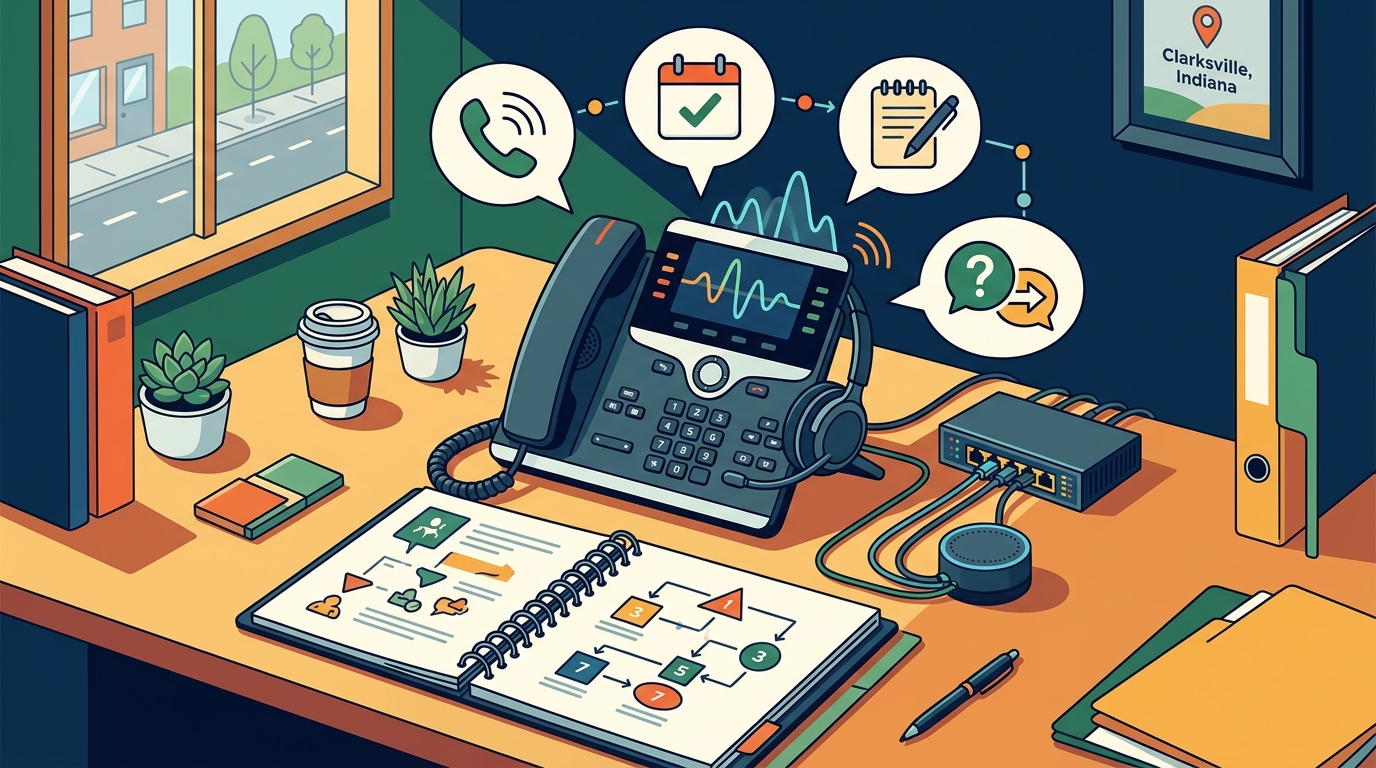
Create a visual flowchart of every possible caller interaction and outcome. Document the decision points where the AI must branch based on user input, such as service type or urgency. Include fallback paths for when the AI does not understand a request or when a human agent is required. A detailed call tree serves as the blueprint for the AI's conversational logic.
3. Choose the Right AI Platform
4. Integrate with Your CRM and Phone System
Ensure the AI receptionist connects directly to your customer relationship management and telephony systems. This integration allows the AI to log calls, update contact records, and trigger automated follow-up sequences without manual data entry. Seamless connectivity is critical for maintaining a single source of truth for customer interactions. Verify that the API connections are stable and secure before proceeding to the next phase.
5. Script and Train the AI Persona
Develop a consistent tone and voice that reflects your brand identity. Write the initial scripts for greetings, common questions, and error handling. Train the AI on your specific industry terminology and local references to ensure natural-sounding responses. The persona should be helpful and professional, avoiding overly robotic or generic phrasing that might frustrate callers.
6. Test Thoroughly Before Launch
Conduct extensive testing with internal staff and a small group of trusted customers. Simulate various call scenarios, including difficult questions, background noise, and ambiguous requests. Identify any gaps in the AI's understanding or logical errors in the call tree. This phase is crucial for refining the system and ensuring a positive user experience from day one.
7. Monitor Performance and Optimize
Track key metrics such as call duration, resolution rate, and customer satisfaction. Review transcripts of AI interactions regularly to identify areas for improvement. Update the AI's knowledge base and scripts based on real-world feedback and new business processes. Continuous optimization ensures the AI receptionist remains effective as your business evolves.
Choosing the Right Approach
Select the implementation path that best matches your current technical resources and business complexity. For most new businesses, starting with a managed service that handles both setup and ongoing maintenance is the most efficient route. This approach minimizes the learning curve and allows you to focus on core operations while the AI handles front-line communication.
Frequently Asked Questions
How long does it take to set up an AI receptionist?
The setup process typically takes two to four weeks, depending on the complexity of the call tree and integration requirements. Managed services can often deploy a functional system within a few days of initial configuration.
Can an AI receptionist handle complex customer questions?
Modern AI systems can handle a wide range of complex questions, but they work best when paired with a clear knowledge base and escalation paths to human agents for highly specific issues.
What happens if the AI does not understand a caller?
The system should have a predefined fallback mechanism that either asks for clarification or transfers the call to a human representative. This ensures that no caller is left without assistance.
Is an AI receptionist suitable for all types of businesses?
While most businesses can benefit from AI receptionists, they are particularly effective for service-based industries with high call volumes and repetitive inquiries. Businesses with highly unique or custom service offerings may require more extensive training.