

AI Receptionists for Small Business: Answering Calls and Booking Appointments
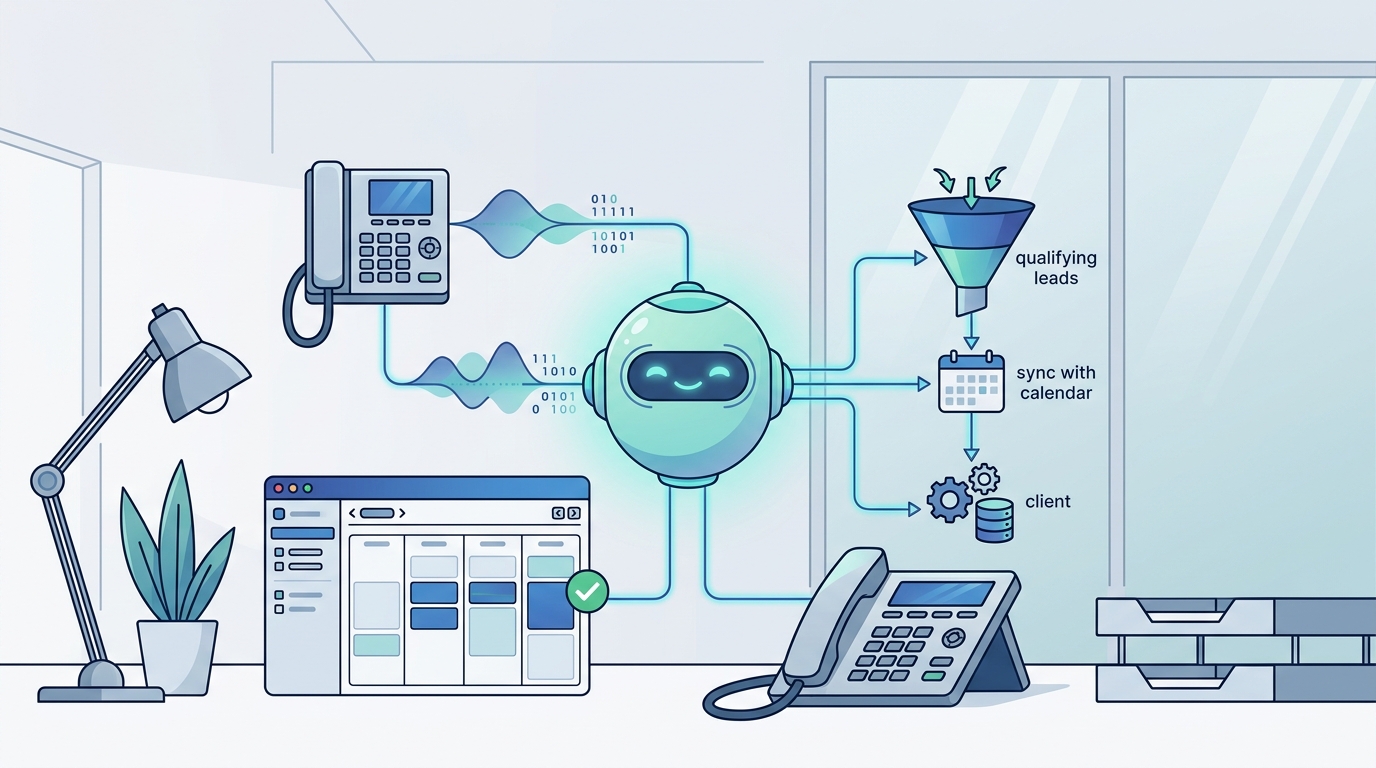
Yes, there are AI receptionist platforms that answer every call and book appointments for small businesses. These systems use natural language processing to handle inquiries, qualify leads, and sync with calendars in real time. This guide covers the top platforms, integration methods, and how to implement an AI front desk for your business. For additional details, review the .
AI Receptionist Platforms
Top Vendors and Features
TLG Consulting helps small businesses in Clarksville, Indiana, evaluate these tools to find the right fit. We focus on practical AI implementations that solve real operational bottlenecks. Our approach ensures that the technology integrates seamlessly with your existing workflows rather than creating new ones. For additional details, review the Customer Experience.
Call Answering Capabilities
Call answering is the core function of any AI receptionist. The system must pick up calls instantly, regardless of the time of day or the number of concurrent callers. This capability is critical for small businesses that cannot afford to miss a single lead. Modern AI systems use speech-to-text and text-to-speech engines to create a natural-sounding voice experience. For additional details, review the Frequently Asked Questions.
Handling Complex Scenarios
Basic call answering is no longer enough. Today's platforms must handle interruptions, background noise, and varying accents. They should be able to pause and wait for the caller to finish speaking. Furthermore, the AI must be programmed with a decision tree that covers common scenarios, such as pricing inquiries, location details, and emergency protocols. If the AI cannot answer a question, it should politely offer to take a message or transfer the call to a human. For additional details, review the About.
Missed calls represent lost revenue. An AI receptionist ensures that every call is answered, every lead is captured, and every appointment is booked. This level of consistency is difficult to achieve with human staff alone, especially during peak hours or after business hours.
Appointment Booking Integration
Appointment booking integration is the process of connecting an AI receptionist with a scheduling system to allow real-time availability checks and bookings. This is where the AI moves from a passive listener to an active business tool. The system queries your calendar, identifies open slots, and confirms the appointment with the caller. It also sends confirmation emails or texts automatically.
Real-Time Availability
The key to successful booking is real-time data synchronization. If the AI books a slot that is already taken, it damages customer trust. Therefore, the integration must be bidirectional. When a human books an appointment, the AI must see it immediately. When the AI books an appointment, the human calendar must update instantly. This prevents double-booking and ensures that your team is always aware of upcoming visits.
TLG Consulting assists clients in setting up these integrations. We ensure that your scheduling software, whether it is a general calendar or a specialized practice management system, communicates effectively with the AI platform. This technical setup is often the most complex part of the deployment, and our expertise ensures it is done correctly.
Lead Qualification
Lead qualification is the process of evaluating a potential customer's needs, budget, and timeline to determine their fit for your services. An AI receptionist can perform this qualification during the initial call. By asking a series of predefined questions, the AI can score the lead and prioritize it for your sales team. This ensures that your human staff spends time on high-value prospects rather than unqualified inquiries.
Scoring and Routing
Effective lead qualification involves more than just collecting contact information. The AI should ask about the specific problem the caller is trying to solve. It should also inquire about their budget range and their desired timeline. Based on these answers, the system can assign a score to the lead. High-scoring leads can be routed to a senior sales representative, while lower-scoring leads can be added to a nurture sequence. This automated triage saves time and improves conversion rates.
Calendar and CRM Integration
Calendar and CRM integration is the connection between your AI receptionist, your scheduling tools, and your customer relationship management software. This integration ensures that all data collected during the call is stored in a central database. It allows your team to view the full history of interactions with each customer, including notes taken by the AI. This creates a seamless workflow from the first call to the final sale.
Data Hygiene and Automation
Without proper integration, data silos form. The AI might book an appointment, but the CRM might not have the caller's notes. This leads to poor follow-up and lost opportunities. A robust integration ensures that every detail, from the caller's name to their specific questions, is logged in the CRM. This data can then be used to trigger automated follow-up emails or tasks for your team. It turns a simple phone call into a structured sales opportunity.
Comparison of AI Receptionist Features
| Call Answering | Standard hours only | 24/7/365 coverage |
| Language Model | Keyword-based | Contextual NLP |
| Booking | Manual entry | Real-time API sync |
| Lead Qualification | None | Automated scoring |
| CRM Integration | CSV export | Bi-directional sync |
Key Takeaways
- AI receptionists can answer every call, eliminating missed opportunities.
- Real-time calendar integration is essential to prevent double-booking.
- Lead qualification allows you to prioritize high-value prospects.
- CRM integration ensures data consistency across your team.
- Choose a platform with strong NLP capabilities for natural conversations.
- TLG Consulting provides expert guidance on selecting and implementing these tools.
- Start with a pilot program to test the AI with a subset of calls.
- Monitor performance metrics regularly to optimize the AI's behavior.
Frequently Asked Questions
Can an AI receptionist handle complex questions?
Yes, advanced AI receptionists use natural language processing to understand context and handle multi-turn conversations. They can ask clarifying questions and escalate to a human if the query is too complex.
How does the AI know which appointments are available?
The AI connects to your calendar via an API. It queries the calendar in real time to check for open slots before offering them to the caller.
Will the AI sound robotic?
Modern AI voices are highly realistic. Most callers cannot distinguish between an AI and a human. The tone and pace can be customized to match your brand.
Can the AI book appointments for multiple staff members?
Yes, the AI can check the availability of multiple staff members and book the caller with the most suitable person based on their skills and schedule.
What happens if the AI makes a mistake?
You can review call recordings and transcripts to identify errors. You can then retrain the AI or adjust its decision tree to prevent similar mistakes in the future.
Is it expensive to implement an AI receptionist?
Costs vary by provider and feature set. However, many AI receptionists are more affordable than hiring a full-time human receptionist, especially when considering 24/7 coverage.
Conclusion
Implementing an AI receptionist is a strategic move for any small business looking to scale. It ensures that no lead is missed, no appointment is double-booked, and no customer is left waiting. By integrating with your calendar and CRM, you create a seamless workflow that saves time and increases revenue. TLG Consulting is here to help you navigate this process. We provide the expertise you need to select the right platform and implement it successfully. Schedule your consultation today to start your journey toward a more efficient and responsive business.